Showing posts with label Religion. Show all posts

Friday, September 13, 2013

Pilate's Wife

Antoinette May takes the important tale of Christ and Pontius Pilate and puts a spin on it, telling it from a woman, Claudia, Pilate's wife, via her life story. Pilate's Wife is an intellectual read, but once the story is started, it's hard to stop reading. Truthfully, I'm not very knowledgeable about this time period in history, nor do I buy that this is the "true story" of Christ, but it's an interesting theory. Under the genre of historical fiction, I found it a very interesting read. I recommend it to any who enjoy reading about women in history. 4 Stars. 

Thursday, September 5, 2013

The Storyteller

 
The latest Jodi Picoult book, The Storyteller, is not quite a book I would classify as a "Jodi Picoult" book. I'd classify it as a Holocaust novel instead; it is very much unlike all her other works. Picoult tries to make it her own, make it thought provoking, but for me, it's simply a Holocaust novel. The Storyteller is three stories in one, the past, the present, and the allegory. I enjoyed all three aspects, and felt that they could all stand independently, in fact, I would have been fine without the "present" story. Generally, though, I feel that way about all past/present historical fiction novels. 
 
So, I did like it. The characters were real, imperfectly so. The story was compelling. I enjoyed reading it, couldn't put it down at parts. The questions of the novel, "Can you forgive the unforgivable?" and "Where is the line between justice and mercy?" did not impact me on the level I would have liked them to, nor did I bond with Sage since I feel I would have made different choices. And yet, I am not Jewish. My grandmother was not in a concentration camp. A Nazi Officer has not asked me to forgive him. This isn't a realistic question for me. I would like to think one way, but until you're in the situation yourself, can you really know how you would respond? I'm not sure. 
 
The Storyteller is not an original novel, but it is a good read. I highly recommend it. 4.5 Stars.

Tuesday, July 9, 2013

The Great McCoy Weekend

Two weekends ago was our Great McCoy weekend. Cassidy's Grandpa Harry had his 75th birthday and a lot of family came out to help celebrate. On Saturday, Harry was given the best present of all as he baptized his younger sister. It was really neat to be at the baptism. Everyone was very excited ad a little emotional to see Ann be baptised. 

That night there was a "luau" to celebrate Grandpa Harry's birthday. The Soaki family made us a yummy dinner and then performed for us. 
Sunday we had more festivities. Ann was confirmed in church and we barbecued for dinner. It was a fun weekend! 


Ellie loved being the center of attention! 


Sunday, May 19, 2013

The Genesis Secret


Tom Knox's Genesis Secret tells the suspenseful yet intelligent tale of reporter Robert Luttrell. Sent on a supposedly simple assignment about the excavation of Gobekli Tepe in Kurdish Turkey, the oldest remains of human civilization and apparent Garden of Eden. Rob is quickly drawn in to the mystery of Gobekli Tepe, why the locals are resisting the dig, and, ultimately, the death of the lead archaeologist. Back in the UK, a string of brutal murders are being committed and investigated by the Scotland Yard, especially Detective Forrester. Eventually, a connection is made and Forrester and Luttrell must work together to discover the Genesis secret and, more importantly, catch the crazed murderer. 

The Genesis Secret  is a fairly intense read, not one you can necessarily read at the beach or with distractions around, especially at the end. I mean, James Joyce is referenced! It's a good book; though slow to start, once it all starts to come together it gets hard to put down. However, it is rather violent and grotesque and the language is, at times, obscene and responsive to the violence. The characters attempt to be real and relatable, but fall short. I was more captivated by the story line and desire to solve the mystery than the fate of the characters. I enjoyed it, but I didn't love it. 3 & 1/2 stars. 

Monday, May 6, 2013

Ellie's Baby Blessing


Cassidy blessed Ellie at church on Sunday & a lot of our family was able to come and support us. I didn't get too many pictures on my camera (thank goodness for grandmas, so I know there's more pictures!) but here's some of the cute ones!

Great-Granddad Harry meeting Miss Ellie
(and Cass in an awkward photobomb!) 


Cousin Will tasting Ellie's Dress!


Great-Grandpa Johnson loving on his babies!


Cousins Walker & Caitlyn


Great-Grandma Carma, Grandpa Morrell, Ellie, me, & Cass


Auntie Jordyn can't get enough of Baby Ellie!


Proud Grandma and Grandpa! 


Jenn & Will, me & Ellie


Monday, March 18, 2013

The New York Regional Mormon Singles Halloween Dance

A few years ago, I took a Mormon Lit class at UVU.  It was a really interesting class and exposed me to new novels. Comedian Elna Baker's The New York Regional Mormon Singles Halloween Dance was not a novel we read in that class, but our professor talked about it to us one day and read us an excerpt.  After hearing Baker's voice come to life via my professor, I had to get my hands on it. 
New York Regional is a hilarious yet touching memoir by a born and bred world-traveling Mormon. Her sense of humor sort of reminds me of Chelsea Handler, but not as crass. So I recommend this book with the caveat Baker uses in her dedication to her parents: " . . . aside from the nine-F words, thirteen Sh-words, four A-holes, page 257, and the entire Warren Beatty chapter . . . You might want to avoid chapters twenty-one, twenty-two, twenty-three . . ." 
Read on! 


Tuesday, February 5, 2013

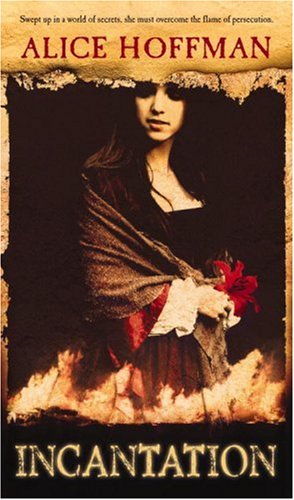
Incantation

Alice Hoffman's Incantation tells the tale of undercover Jews in Spain during the 1500s.  Our main character, Estrella, doesn't even realize her family is Jewish.  She finally puts the pieces together and sees the danger her family is in.  They have been practicing Judaism but masquerading as good Catholics for years. When they are found out . . . well, it won't be good. At one point, Estrella thinks, "Still, I coudln't help but wonder if it was a mistake for people like us to be tied to a place. If we weren't meant to wander.  If everything we needed was tied up in who we were."  Later, she asks her grandfather a similar question.  He answers, "You run once, what makes you think you won't have to run all the rest of your life?" But if you don't run, will there be a "rest of your life"? 
Incantation is a great historical fiction for the young adult reader.  It delves into history, telling a tale we don't come across too often.  I recommend this novel to all YA Historical Fiction fans. Read on! 

Monday, February 4, 2013

Narnia and the Bible

I recently read The Chronicles of Narnia by CS Lewis and could not help but agree with those who slate it as a children's bible with obvious allusions to biblical stories and morals as well as Christ himself.

In the first novel, The Magician's Nephew, Polly and Digory watch Aslan sing Narnia into existence.  The world was empty: Aslan brought it to life.  He sang the plants and animals out of the ground.  He gave Narnia a king and queen in Frank and Helen; who would be the two humans to have dominion over the Narnians. They would rule and care for them. But Aslan also created a tree, even a guarded tree. A tree near which the evil Jadis plays the role of the serpent to seduce Digory into eating. The Magician's Nephew retells the creation and the fall from Genesis. Aslan is clearly Christ, or God, in making his Earth, Jadis acts as Satan, and Frank and Helen play the roles of Adam and Eve set to take care of their creatures while Digory doubles as an Eve considering his relationship with the tree.

In The Lion, the Witch, and the Wardrobe, we again see Aslan as a Christ figure.  He has been gone from Narnia; Jadis, as the White Witch, reigns all of Narnia. Stories are told of Aslan, but no one has seen him.  Some still have hope, some do not. Then the Pevensie children arrive, seemingly to fulfill a prophesy.  At any rate, Jadis does not want them there to interfere.

Aslan appears, finally, to those who believe in him and willingly gives his life in Edmund's place.  He goes quite like a lamb to the slaughter and meekly allows himself to be shaved and beaten before he is killed. Lucy and Susan, ever faithful and representing Mary and Mary Magdalene, go to mourn Aslan's body and find, instead, that he is very much alive.  Different from Christ, Aslan does not take three days, but is risen almost immediately to return and lead his troops to success.  His good finally defeats Jadis's evil.

But all too soon Aslan must leave again.  he crowns the four Pevensie children, making Peter High King. He sets up Narnia for his departure, just as Christ prepared his disciples.  Peter is said to represent the biblical Peter upon whom Christ builds his church and Catholics believe to be the first Pope.   Lewis is presenting us here with, if not clearly an allegory of Christ's life, death, and resurrection, than at least a parable with morals taught to the reader.

The Horse and His Boy takes place in Narnia's golden age, under the rule of High King Peter.  There is not so much of a tie-in to a biblical tale in this work, so much as a moral or parable taught. Aslan appears, not as himself, throughout the novel, and then presents himself as himself to the children Shasta and Avaris. he reveals that he was all of the lions they met along their journey, acting to protect them all along.  This reminded me of the footprints poem or Poor Wayfaring Man of Grief. Just because we don't think it's the Lord; it doesn't mean it's not.  

Prince Caspian also gives us a parable.  Lucy believes she is seeing Aslan, but everyone thinks she is being silly and childish, so she doesn't not follow him.  Once Lu does follow him, she can finally see and speak with him.  The others follow and eventually can see him too. Lucy is later chastised by Aslan, and learns that she should have followed him regardless.  Likewise, we should follow Christ even if those around us will not, even if it is difficult, because it's the right thing to do.  By acting on faith, we will be rewarded.

There's also a quote that I really liked, where a Narnian is confused about calling on the Old kings, the Pevensies, or calling on Aslan.  his question is answered with, "If you mean Aslan, it's all one calling on him and on the kings.  They were his servants." They would act, hopefully, as Aslan would.  The Pevensies  here are similar to Christ's prophets.  They will only act in his interest.

Aslan also restores Caspian to his rightful throne. He is set up as king to care for the Narnians. This could read, depending on one's religious preferences, of the restoration of the true church after corruption. 

I found The Voyage of the Dawn Treader and The Silver Chair to be the least allegorical of the series. The best I can come up with is the characters' struggle for light over dark and searching for the spiritual life and Aslan's land, especially Reepicheep, in Voyage. In Silver Chair my link to scriptures and spirituality would be that the spirituality and stories of Alsan are dying in the land. The world is becoming a darker place as it is being set up for the end of Narnia. 
The Last Battle is the Narnian Revelations and consequent end of the world. At this point, the reader is already familiar with the main characters, and no time is wasted with getting straight to the point and conclusion of Narnia. A false Aslan, or an anti-Christ, is introduced, and because it has been so long since Aslan has visited or anyone has spoken of him, the Narnians to not realize that he is asking things of them that the real Aslan never would. Shift, an old ape, presents himself as the new Aslan's keeper and voice piece. He doesn't let the people see Aslan and doesn't let him speak. Shift is the one with the power and is the real representation of the Anti-Christ.

Shift begins to collaborate with the Calormenes and is slowly selling Narnians as slaves to them. Some Narnians are catching on to Shift's falseness, others still yearn to see Aslan for themselves and hang onto Shift's every world. With the appearance of Jill and Eustace, and then other Friends of Narnia, the world begins to fall apart. There is a final judgement and few are chosen to join the Friends of Narnia in Aslan's paradisaical country.

Strangely, Emeth, a Calormene soldier and worshiper of Tash, a false God, is admitted to Aslan's Land. Emeth is confused, but greeted warmly by Aslan. Because Emeth did good in Tash's name, he was truly doing good for Aslan. Aslan tells him: "I take to me the service which thou hast done to Tash . . . if any man swear by him and keep his oath for the oath's sake, it is by me that he has truly sworn, though he knew it not, and it is I who reward him." There is some controversy regarding Emeth's "admission to heaven," as it were, but I prefer to take the side that Jesus, like Aslan, will not punish good people simply for doing good things in someone else's name, especially if they have never heard of them.

Despite Lewis's protestations of Narnia being allegorical, an argument is easy to make that they are. So it comes down to the question of intent: If Lewis did not intend them to be allegorical, can they be? Or does his intent have no impact on the reader, who may or may not see them as allegorical? What do you think?

Wednesday, January 23, 2013

The Chronicles of Narnia

After many years from whence I set my mind to it, I finally read The Chronicles of Narnia. It was very interesting to read these works that many have discussed and, actually, debated.  One of the main debates is which order to read them in: how Lewis wrote and published them, or in chronological order, as they are currently published. My copy has all seven in one, and I read them in the order the appeared in this compilation, chronologically. 

One of my reasons for wanted to read Narnia in the first place was because I'd heard it was like a children's bible; a way to present some of the stories and morals from the bible to young children. In fact, when I first read The Magician's Nephew a few years ago, I wrote a paper on it connecting it to Genesis's telling of the creation and the tale of Adam and Eve. It seems to me that Narnia certainly has many links to the bible, but not in an annoying way, more in a teach-your-child kind of way.

Lewis denied allegorical intent in his writing, instead stating that the aspects of Christianity he presented are merely "supposition"1 and I find they're still a great series regardless of their Christian aspect. They're written for younger children, but enjoyable to all ages. I highly recommend this series (even though I didn't like the ending!): just read the books before the movies because they're very different, especially in the battles. Read on! 

1. http://en.wikipedia.org/wiki/Narnia_books  Yes, it's Wikipedia, but I'm quoting a cited source. I just don't know if it's 51 or 52! :) 

Sunday, December 23, 2012

Spiritual Sunday: A Brother Like That

One of my favorite Christmas stories is "A Brother Like That." I love the message and how it inspires me to be a better person, to be a brother like that. 
Paul received an automobile from his brother as a Christmas present. On Christmas Eve when Paul came out of his office, a street urchin was walking around the shiny new car, admiring it.

"Is this your car, Mister?" he asked.

Paul nodded. "My brother gave it to me for Christmas." The boy was astounded. "You mean your brother gave it to you and it didn't cost you nothing? Boy, I wish..." He hesitated. Of course Paul knew what he was going to wish for. He was going to wish he had a brother like that. But what the lad said jarred Paul all the way down to his heels.

"I wish," the boy went on, "that I could be a brother like that."

Paul looked at the boy in astonishment, then impulsively he added, "Would you like to take a ride in my automobile?"

"Oh yes, I'd love that."

After a short ride, the boy turned and with his eyes aglow, said, "Mister, would you mind driving in front of my house?" Paul smiled a little. He thought he knew what the lad wanted. He wanted to show his neighbors that he could ride home in a big automobile. But Paul was wrong again.

"Will you stop where those two steps are?" the boy asked. He ran up the steps. Then in a little while Paul heard him coming back, but he was not coming fast. He was carrying his little crippled brother. He sat him down on the bottom step, then sort of squeezed up against him and pointed to the car. "There she is, Buddy, just like I told you upstairs. His brother gave it to him for Christmas and it didn't cost him a cent. And some day I'm gonna give you one just like it...then you can see for yourself all the pretty things in the Christmas windows that I've been trying to tell you about."

Paul got out and lifted the lad to the front seat of his car. The shining-eyed older brother climbed in beside him and the three of them began a memorable holiday ride.

That Christmas Eve, Paul learned what Jesus meant when he had said: "It is more blessed to give..." 
I know sometimes it's hard to be a brother like that. It's easy to say, "I don't have a brother like that, so why should I be like that?" But the fact is, we do have a brother like that, Jesus Christ. I hope we can all  keep him in our hearts these next few days as Christmas is upon us. Merry Christmas!  

Sunday, November 11, 2012

Spiritual Sunday: New and Everlasting Covenant

A few days ago, I was reading in Ezekiel and came across ". . . I will make a covenant of peace with them; it shall be an everlasting covenant . . ." (37:26) the footnote for "everlasting covenant" was for the Topical Guide "New and Everlasting Covenant" and it got me thinking. I've never realized what exactly the New and Everlasting Covenant is. It's something I've just felt like I missed out on. Everyone else seemed to get it, so I figured there was something wrong with me. I never wanted to ask and be embarrassed, but on the flip side if it was something nobody knew, then the teacher would be embarrassed. And if it's something no one knows but everyone knows nobody knows (you still with me?) then asking would still be awkward. So I never asked and just figured I never knew and couldn't ever know. 

But I'm older now, and took research into my own hands. If it was listed in the Topical Guide, would it be listed in the Bible Dictionary? The answer is no. So I returned to the Topical Guide and looked at some of the related scriptures. They didn't clear anything up, but they did give me two ideas. 

1. Any promise the Lord makes is both new and everlasting. It is new when he makes it and everlasting because He, we, and the covenant are all eternal. My reasoning is that the different times it is used in the scriptures are mostly different. In the case of Noah and the ark, God promises to never again flood the earth: "And the bow shall be in the cloud; and I will look upon it, that I may remember the everlasting covenant between God and every living creature of all flesh that is upon the earth." (Gen 9:16)  There is no other promise where God promises to not flood the earth. He's already promise that; He can't promise it again. So it stands to reason that any more covenants He makes would also be new and everlasting. 

2. The New and Everlasting Covenant is the sealing, or binding, power of the priesthood. So often we hear "the new and everlasting covenant of [eternal or celestial] marriage" (D&C 131:2). D&C 132:19 also implies it's celestial marriage. Ergo, because of the power of the Melchizedek priesthood, we are able to sealed, and that is the new and everlasting covenant.  

I wasn't satisfied with my two ideas though. Could it be that simple and straightforward? Could I really figure it out by myself? I needed more "proof" so to speak. I needed someone to spell it out for me. 

Don't laugh, but I turned to Google. I wanted to know the church's stance on it, of course, but I also wanted to see what other religions thought. The phrase is in The Bible, even the Torah portion, so Christians and Jews should have something to say about it. The first page of Google was basically LDS sources; other religions almost see it as two separate covenants, which was unhelpful. It just didn't seem right. Other religions also vaguely referred to Jesus as The New and Everlasting Covenant himself. Other of the top Google results were from anti-/former LDS sites. Most of them think it refers to polygamy (from the D&C scriptures, I'm sure) or is taking away from the remembrance and importance of Jesus Christ as the New and Everlasting Covenant himself. 

The logic for Jesus as the New and Everlasting Covenant is that God made a covenant, the "old covenant," with the Jews. Jesus fulfilled that promise, law, covenant, and became the "new covenant" and because he is eternal, also everlasting. 

The first site I found was a BYU site written by D Cecil Clark (of whom I've never before heard and Google was unhelpful), who posits: 
The new and everlasting covenant is the gospel of Jesus Christ. The sum of all gospel covenants that God makes with mankind is called "the new and everlasting covenant" and consists of several individual covenants, each of which is called "a new and an everlasting covenant." It is "new" when given to a person or a people for the first time, and "everlasting" because the gospel of Jesus Christ and Plan of Salvation existed before the world was formed and will exist forever (MD, pp. 479-80).
Baptism, marriage, and all other covenants from God necessary for salvation are new and everlasting (D&C 22:1;45:9;66:2;132:4-7). Holy covenants have been introduced anew in each of the dispensations of the gospel from Adam to Joseph Smith, and have been available whenever the gospel of Jesus Christ has been upon the earth. Therefore, these covenants are spoken of as everlasting. Covenants of salvation and exaltation are everlasting in the sense also that once entered into they are forever binding and valid only if they are not broken by transgression.
All covenants between God and mankind are part of the new and everlasting covenant (D&C 22;132:6-7). Thus, celestial marriage is a new and an everlasting covenant (D&C 132:4) or the new and everlasting covenant of marriage. Some covenants, such as baptism, have force in all dispensations. Other covenants are made for special purposes in particular dispensations; circumcision as a sign of a covenant is of this type (MD, p. 479). The same eternal covenant conditions may be established through other ritual signs at other times.
Okay. That makes sense. But what else is out there? Who else thinks that? lds.org gives us a similar, yet more succinct, answer. "The fulness of the gospel of Jesus Christ (D&C 66:2). It is new every time it is revealed anew following a period of apostasy. It is everlasting in the sense that it is God’s covenant and has been enjoyed in every gospel dispensation where people have been willing to receive it. The new and everlasting covenant was revealed again to men on earth by Jesus Christ through the prophet Joseph Smith. It contains sacred ordinances administered by priesthood authority—such as baptism and temple marriage—that provide for man’s salvation, immortality, and eternal life. When people accept the gospel and promise to keep God’s commandments, God covenants to give them the blessings of his new and everlasting covenant."

Alright, I'm starting to get my answer. I can get that. It's the what everyone thinks put together. It's Jesus, the priesthood, every time the Lord makes a promise, it's the whole gospel. That makes sense. That's simple. (Why do I not like the simple answers? The church is full of them!) So I was right, partially. I was just incomplete. But now I know what exactly the New and Everlasting Covenant is. 

I'll let D Todd Christofferson (Quorum of the Twelve) close for me. The video sums it up quite nicely. I especially like the idea that it is "newly restored in each dispensation."


text of video: 
The scriptures speak of the new and everlasting covenant. The new and everlasting covenant is the gospel of Jesus Christ. In other words, the doctrines and commandments of the gospel constitute the substance of an everlasting covenant between God and man that is newly restored in each dispensation. If we were to state the new and everlasting covenant in one sentence it would be this: "For God so loved the world, that he gave his only begotten Son, that whosoever believeth in him should not perish, but have everlasting life" (John 3:16).
Jesus explained what it means to believe in Him: "Now this is the commandment [or in other words, this is the covenant]: Repent, all ye ends of the earth, and come unto me and be baptized in my name, that ye may be sanctified by the reception of the Holy Ghost, that ye may stand spotless before me at the last day" (3 Nephi 27:20). (Ensign, May 2009)

But here's more "proof" if you need it, plus they're nice quotes:

Joseph Fielding Smith (while in the Quorum of the Twelve)
What is the new and everlasting covenant? I regret to say that there are some members of the Church who are misled and misinformed in regard to what the new and everlasting covenant really is. The new and everlasting covenant is the sum total of all gospel covenants and obligations. (Doctrines of Salvation, 1:156)
Now there is a clear-cut definition in detail of the new and everlasting covenant. It is everything—the fulness of the gospel. So marriage properly performed, baptism, ordination to the priesthood, everything else—every contract, every obligation, every performance that pertains to the gospel of Jesus Christ, which is sealed by the Holy Spirit of promise according to his law here given, is a part of the new and everlasting covenant. (Doctrines of Salvation, 1:158)
Bruce R. McConkie (Quorum of the Twelve)
"The new and everlasting covenant" is the fulness of the gospel, and the gospel is the covenant of salvation that the Lord makes with men. It is new because it has been revealed anew in our day; it is everlasting because it has always been had by faithful people, not only on this earth but on all the earths inhabited by the children of our Father. (Brigham Young University, 6 November 1977) 
[Doesn't McConkie's read similar to lds.org?? :)]

Sunday, November 4, 2012

Spiritual Sunday: Jonathon Napela

Today in Stake Conference, our Stake President spoke of an awesome man in LDS history, Jonathon Napela, and I couldn't help but try to learn more about him and share with all of you. 

One of the earliest coverts in Hawaii, Napela was a prominent member of his society and became an important member the church and helped George Q Cannon translate the Book of Mormon into Hawaiian. 

A stand-out story from the stake president's talk told of a time when Napela and Cannon prayed for good weather for an outside meeting. Cannon started to worry that the weather would not hold and began to make preparations to move the meeting inside. Napela was confused at Cannon's actions and asked him, "Did we not pray for good weather?" The meeting was held outside and the weather was not an issue. 

Napela was also instrumental in the missionary efforts in Hawaii. He taught his language to Cannon, who returned the favor. Napela offered to open his home to all incoming missionaries and teach them the language and the customs of his people before they began to teach and serve. He was setting the stage and planting ideas for missionary training, for the MTC. 

What stuck out most to me of the tales of the life of Napela was his devotion to his dear wife, Kitty. She contracted leprosy and was to be quarantined for the rest of her life. Napela applied to go to the leper colony with her. He said he was devoted to his wife and had promised before God that he would be with her "til death do us part." Though death would surely come soon, he could not abandon his wife, he could not break his promise. He was allowed to go into quarantine with his wife. In the leper colony he still taught the gospel and presided over the saints there. Eventually, Napela, too, contracted leprosy and after six years in the colony preceded his wife in death. 

Learning about Napela today was so neat. I had an abstract knowledge that the church grew early and strong in Hawaii, but I was not familiar with the people or the stories. I had never heard of Napela before, and his story touched me. He was a good strong man, devoted to his wife and his God. He is an inspiration. 

Sunday, October 7, 2012

Spiritual Sunday: General Conference

This weekend was the 182 Semiannual General Conference for The Church of Jesus Christ of Latter Day Saints. Here's some of my favorite parts from today (not direct quotes, just kind of highlights and my thoughts).

Boyd K Packer
  • We all make mistakes, what is important is fixing our mistakes and repenting of them.
  • Our message [as members of the church] is one of Faith, Hope, and Jesus as our Savior.

Jeffrey R Holland
  • I always forget how little knowledge Jesus's disciples had upon his death. Elder Holland reminded me of how limited their knowledge was in the gospel, especially as we understand it today. 
  • Elder Holland told the story of the disciples after Christ's death and their return to fishing. It was a similar experience to when Christ first called them to serve. Once the disciples realized Christ was resurrected, they were once again called to serve him. 
  • Jesus asked Peter, "Do you love me?" three times, reminding him of experiences just days before. "Then feed my sheep!"
  • Will God ask us the same question upon our meeting? 
  • Love equals loyalty; if we love God, we are loyal to Him. 
  • Christ's death was the beginning of Christianity, not the end. 
  • The call is to come and stay true. The Lord expects our love at every stage of our lives. 
  • Am I feeding His sheep? 

President Thomas S Monson
  • Don't dwell on the negative, take a step back and find the positive.
  • "Men are that they might have joy"
  • Never postpone a prompting! 
  • Allow yourself to be an instrument in the Lord's hands
  • The opportunity to be a blessing in the life of another often comes unexpectedly.

Robert D Hales
  • What does it mean to be a Christian? 
  • Elder Hales retold the story of the disciples, but as an example to quickly return to the Lord after leaving him and receive his blessings. 
  • Feed His sheep! 
  • "The Savior will make us adequate to his work"
  • "Through His love and grace we can become more Christian Christians"
  • Am I a good Christian? 
If you watched conference, what was your favorite part? What did you learn? 


Friday, June 22, 2012

When the Black Girl Sings


Bil Wright's When the Black Girl Sings tell the coming of age story of an adopted young black girl. Adoption is the texture, rather than the storyline, but the novel does deal with important issues such as race, religion (but it isn't preachy!), having to make choices, and growing up. 


While well written and teaching a good lesson, When the Black Girl Sings didn't really appeal to me. It just didn't pull me in. I didn't identify with any of the characters. I think I only recommend it to kids who are faced with the same issues the novel deals with. 


Thursday, June 14, 2012

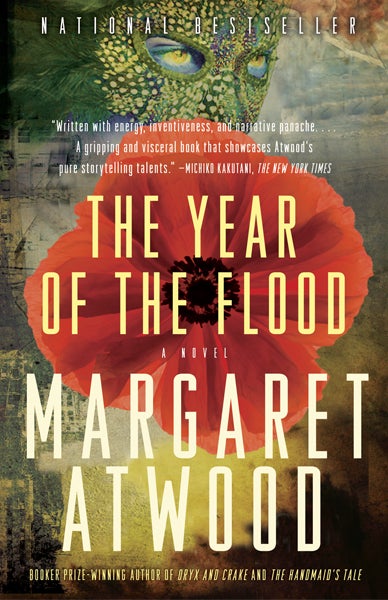
The Year of the Flood

 "So, if you were making the world, you'd make it better?" I said. Better than God, was 
what I meant.  All of a sudden I was feeling pious, like Bernice.  Like a Gardener.  
"Yes," he said. "As a matter of fact, I would."

The Year of the Flood is slated as a sequel to Oryx and Crakeit's really more of a companion novel in my mind. It follows the forward-backward/past&present structure, as well as time frame, of Oryx and Crake with different characters. The Year of the Flood wraps up the cliffhanger of Oryx and Crake, which was very good. It's interesting, however, that when I read Oryx and Crake I wanted it to end one way, but with The Year of the Flood I wanted a different ending, luckily the one Margaret gave me!  

The characters of The Year of the Flood belong to a religious group, almost a cult, called "God's Gardeners." The story is told from multiple points of view of women from the gardeners. I found these characters much more relateable than Jimmy and Crake. Possibly because of their gender. Possibly because of the way it was written. Possibly because they are more relateable. However, the storyline was not as exciting as Oryx and Crake, (because I already knew what was coming?)  but I really like and recommend this novel!

Read on!

Thursday, May 31, 2012

Hong Kong: Kowloon

For our last day in Hong Kong we went out to Kowloon to go to the temple.
It was amazing. The interior was very simple and elegant. It was the
perfect blend of the LDS church and Chinese feel. We did a session in Cantonese, 
so I had to wear the headphones, but that actually helped me learn a lot more.
It was a really neat experience!


If you look really hard you can see Moroni in the background! 

Lunch! 

That evening we took another lovely, winding bus ride up to Victoria Peak 
to look at the skyline. It was awesome and a great way to end our trip!
mmmm. . . fuzzy hair!
Hong Kong at night!

Sunday, May 27, 2012

Church in Tsing Yi

For Sunday we had planned to go to the LDS church on the island, but I had one of my wicked migraines, so Cass let me sleep in. Once I felt like a human, we headed over to the closest church near us in Tsing Yi. We didn't know the meeting schedule so had to wait a while for the international ward and just hung out at the church. 

The ward we went to was mostly full of Philippina sisters. It's very common for women from the Philippines to leave there families, come to Hong Kong, and work. I never realized how close the Philippines is to Hong Kong, but you can see how close they are here: 

Some women even had babies back in the Philippines! Babies that they never get to see! But here they were, working so hard in Hong Kong, mostly raising other people's children. And they were the friendliest ladies ever! 

I haven't felt so welcome in a ward for a very long time. I think almost every single woman in that ward came up to introduce themselves. I was blown away by their kindness and testimonies. If we ever move to Hong Kong, that's  the ward I want to go to. Those ladies were an amazing example to me. 

Tuesday, January 24, 2012

Sing You Home


Jodi Picoult's latest, Sing You Home, is controversial, same as any other Jodi book.
It deals with miscarriage, IFV, stillbirth.
Divorce.
Embryos as property or people. 
Lesbians.
Religion.
It's all over the place, but so very much together. Jodi was asked why she mixed the topics together, and she said she couldn't see doing them apart. They belonged together.
And in Sing You Home, they most certainly do. 
As always, I feel a little hesitant in recommending Jodi; she's a little risque for the conservative type. I, however, found this one to be not too extreme or explicit.
And, of course, I loved it to death.
Read on!  

Sunday, January 22, 2012

Spiritual Sunday: Attitude of Gratitude

I am not a very grateful, or thankful, person. In fact, sometimes I make fun of other people for being grateful. I'm a hater; you know that [and sometimes, it's just cheesy, or borderline pathetic. Admit it. I'm right]. But I'm trying to be better. I found some of these quotes which help me understand the importance of being grateful.

"Gratitude is a mark of a noble soul and a refined character. We like to be around those who are grateful. They tend to brighten all around them. They make others feel better about themselves.They tend to be more humble, more joyful, more likable." Joseph B Worthlin

"Mercies and blessings come in different forms--sometimes as hard things. Yet the Lord said, 'Thou shalt thank the Lord thy God in all things' (D&C 59:7). All things means just that: good things, difficult things--not just some things. He has commanded us to be grateful because He knows being grateful will make us happy. This is another evidence of His love." Bonnie D Parkin

"We need to be more grateful. It's one of the marks of strong character, to have a feeling of thanksgiving and gratitude for blessings that are ours. We need more of that spirit in our homes, in our daily associations, in church, everywhere. It's so easy to cultivate the spirit of appreciation." Ezra Taft Benson

In that spirit, here's my cheesy list of things I'm grateful for:
  • My family, near and far. I'm grateful to have Cass as I husband. I'm grateful to have been raised by my parents, who are always showing their love for me. I'm grateful for my brothers and sisters, my  grandparents, my uncle and cousins. I'm grateful for Cass's family, who has welcomed me whole-heartedly.
  • My jobs, both of them. They can be a struggle at times, but I am so grateful to be employed, and to be working while doing what I love. Teenagers can be a pain, but every so often it's worth it to work with them. And ya'll know how I'm addicted to dance.
  • Books, my other addiction.
  • Cassidy's job. Cass's job has been such a blessing, providing us with income and free board while still allowing him to take 18 credit hours. Life would be so much harder without.
  • The Church of Jesus Christ of Latter Day Saints. I know, sometimes I'm a hater. But I'm trying. And the church really has been a blessing in my life. And I'm so grateful that Cass and I will get to be together for all eternity. 
How about you? What are you grateful for? 

Sunday, October 23, 2011

Spiritual Sunday: Visiting Teaching

I've been thinking all day about what I wanted to blog about today and nothing seemed quite right, til I remembered what I had done earlier this week. I did my visiting teaching! I don't really enjoy visiting teaching because I have a hard time talking to people I don't know very well and I just don't have much experience with it in general. Luckily, my companion is a member of the Relief Society Presidency, and she has been just great at arranging the visits and helping the conversation flow. This month it's my turn to do the lesson and I was really nervous; I had never done it before.

Wednesday came around and it had just been a rough day for me in general. I really did not want to go visiting teaching. I wanted to change into my jammies and watch tv and drink diet coke and eat junk food. But I told Dani I would go visiting teaching with her. And I went. 

The message this month is "If We Do Not Doubt" by Julie Beck. She discusses the stripling warriors and how 
“If they did not doubt, God would deliver them” (Alma 56:47).
saying:
“We do not doubt our mothers knew it” (Alma 56:48).
 She encourages us to strive to be like these mothers, so that our children, too, will not doubt we knew it. She concludes with
Latter-day Saint women who recognize that their strength comes from the Lord’s Atonement do not give up during difficult and discouraging times. As covenant keepers, we excel at upholding, nurturing, and protecting children and youth so that one day we might say of this rising generation, “Never had I seen so great courage, nay, not amongst all” (Alma 56:45).
 Even though Sister Beck didn't say it, I think it's also okay to take out of this message that even as women, we can be as the warriors too. We can emulate both the warriors and the mothers. It takes all types of courage.

Dani and I discussed this message with our sister and I really had a great time. We were able to just talk about our lives, which isn't something I get to do with other girls very often. And I left with a smile on my face. I didn't want to go visiting teaching, but I'm glad I did. It totally changed my attitude, and it wasn't the message that did it.