Showing posts with label Historical Fiction. Show all posts

Friday, September 13, 2013

Pilate's Wife

Antoinette May takes the important tale of Christ and Pontius Pilate and puts a spin on it, telling it from a woman, Claudia, Pilate's wife, via her life story. Pilate's Wife is an intellectual read, but once the story is started, it's hard to stop reading. Truthfully, I'm not very knowledgeable about this time period in history, nor do I buy that this is the "true story" of Christ, but it's an interesting theory. Under the genre of historical fiction, I found it a very interesting read. I recommend it to any who enjoy reading about women in history. 4 Stars. 

Thursday, September 5, 2013

The Storyteller

 
The latest Jodi Picoult book, The Storyteller, is not quite a book I would classify as a "Jodi Picoult" book. I'd classify it as a Holocaust novel instead; it is very much unlike all her other works. Picoult tries to make it her own, make it thought provoking, but for me, it's simply a Holocaust novel. The Storyteller is three stories in one, the past, the present, and the allegory. I enjoyed all three aspects, and felt that they could all stand independently, in fact, I would have been fine without the "present" story. Generally, though, I feel that way about all past/present historical fiction novels. 
 
So, I did like it. The characters were real, imperfectly so. The story was compelling. I enjoyed reading it, couldn't put it down at parts. The questions of the novel, "Can you forgive the unforgivable?" and "Where is the line between justice and mercy?" did not impact me on the level I would have liked them to, nor did I bond with Sage since I feel I would have made different choices. And yet, I am not Jewish. My grandmother was not in a concentration camp. A Nazi Officer has not asked me to forgive him. This isn't a realistic question for me. I would like to think one way, but until you're in the situation yourself, can you really know how you would respond? I'm not sure. 
 
The Storyteller is not an original novel, but it is a good read. I highly recommend it. 4.5 Stars.

Wednesday, August 28, 2013

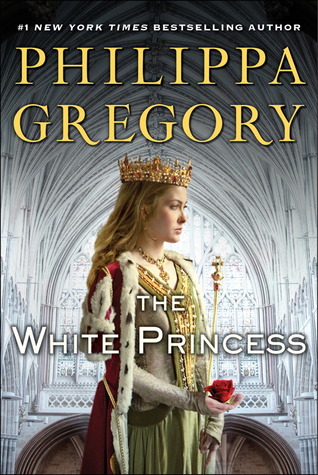
The White Princess

The White Princess is the tale of Elizabeth, the daughter of The White Queen and sister to the Princes in the Tower. At the conclusion of the Cousins' War, when Henry Tudor takes the throne, Henry also takes Elizabeth as his wife. The pair is less than pleased to be wed, but they know it is necessary to unite the houses of York and Lancaster, and it is most necessary for there to be a whole slew of Tudor Princes, else Henry won the war for nothing. Henry struggles to hold the throne, hold the love of England, and gain the love of his wife. Things seem to be going well, but then there is "the boy." The boy who may very well be Prince Richard of York, Elizabeth's brother. The boy with a better claim to the throne then Henry. 

Philippa Gregory is very upfront with the fact that this is fiction about a mystery, and we don't know the truth of the Princes in the Tower or their death. She is only presenting a case of what might have happened, a story strung together by the facts we do know. Loving Gregory's work as I do, I tend to believe her story, that it is possible things could have happened this way. 

As with all historical fiction, we already know how the story ends. There isn't going to be a big twist. Yet The White Princess is still an enjoyable read. It's not my favorite Gregory work because Elizabeth wasn't as complex a character as her mother or grandmother (I also felt the book ended too soon). She is, however, still a unique character. Same as Henry. Both of them are very realistic and make choices I feel to be true to character. Reading The White Princess also helps one understand Henry VIII better because one comes to understand his heritage. I thoroughly enjoyed and recommend this book. 

Tuesday, March 19, 2013

The Wise Woman


The Wise Woman is definitely, 100% Philippa Gregory's weirdest book. If you skipped Virgin Earth and Earthly Joys, this one is a skipper too. It gets pretty weird with the witchcraft and the sex. I'm not sure who the target audience even is. It's just an odd book.

Friday, March 8, 2013

The Virgin's Lover

In The Virgin's Lover, Gregory moves us forward from Henry VIII's reign, past Edward's and Mary's, and into Elizabeth's. (If you want to read them "in order," The Queen's Fool comes prior to The Virgin's Lover.)  The story is not told from the view point of Elizabeth, but one of her lovers, Robert Dudley, as well as his wife Amy.  It's interesting to read from this perspective as one can see the abandoned wife and identify with her pain. It's also interesting to see Robert's guilt, yet how he still chooses to continue on with his affair. If you're into historical fiction, this novel gives an interesting insight into Elizabeth's life and is worth the read. 

Now, Gregory enters into a little bit of speculation, since most folks, obviously, didn't document their own affairs.  But Gregory is great at doing her own research and including an author's note to let your know where and why she made speculations or changes to history. It really makes me respect her as an author. 

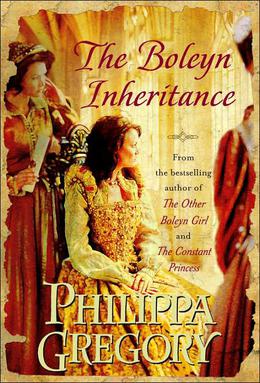
The Boleyn Inheritance

Philippa Gregory's The Boleyn Inheritance picks up where The Other Boleyn Girl left off. Well, skipping the short marriage of Jane Seymour and the birth of her son, Edward. The Boleyn Inheritance shows the changes that have come about because of the interfering Boleyn's and their cousins the Howards. We read about the marriage and annulment of Henry VIII to Anne of Cleves as well as the consequent marriage to Anne Boleyn's much younger cousin, and my second favorite wife, Kitty Howard. 

I enjoyed The Boleyn Inheritance, but it's a little more like short stories put together than Gregory's other works.  I would have liked her to delve more into the characters and given these wives their own novels as well, although I can understand why she chose not to. Writing takes much longer than reading, and Gregory prides herself on doing actual research. This could have gotten very tedious.  Or maybe there wasn't enough truth out there, just rumors or unreliable accounts.  or perhaps she just had other ideas she was anxious to get to work on.  So I understand why the book may be set up like it is, but it made it harder to get into the work  and get to know the characters.  Regardless, it's an enjoyable historical fiction. If you like Henry VIII's life as I do, give it a go! 

Wednesday, February 20, 2013

The Other Boleyn Girl

Just as Katherine of Aragon is my least favorite of Henry VIII's wives, Anne Boleyn is my favorite. This is largely due to Philippa Gregory's The Other Boleyn Girl, which not only tells the story of Anne Boleyn, but also her sister, Mary, one of Henry VIII's many mistresses, and their brother George. 

I really enjoy The Other Boleyn Girl because it's not only an intense faux love story and affair, but it delves into the family relationships of the Boleyn siblings AND it's historical fiction where one learns about the politics and religion, and their relationship, during this portion of Henry VIII's reign. [holy run-on sentence!] Now, of course, given the subject matter and the character of Henry, who is constantly having affairs, it's not necessarily the most chaste book, but it is my favorite by Gregory and I highly recommend it!  

Monday, February 11, 2013

The Constant Princess

My first Philippa Gregory book ever was The Constant Princess, the tale of Catherine of Aragon before she married Henry VIII. It tells of Catherine as Catalina, the Infanta of Spain, only to become Catherine upon her marriage to Arthur, Prince of Wales. Arthur, Henry's older brother who was to become king. Arthur, the prince who became sickly and died too soon. 

Catherine of Aragon is my least favorite of Henry VIII's wives [yes, I have them ranked. ish. Don't judge.], or at least bottom two. It's like a feel bad for her, but I don't feel her the way I feel some of the others. I don't believe this is due to Gregory's writing, but just Catherine herself. 

The Constant Princess does introduce us to a new side of Catherine, a younger Catherine. She is a desperate widow, heartbroken by Arthur's death, abandoned by her father, abandoned by England. And so, she must take her fate into her own hands: she must fight for what she wants, she must fight to become the Queen of England, as she was meant to be.  

If you're interested in Henry VIII, Historical Fiction, or Philippa Gregory at all, this book is worth the read. You'll like it. 

Lady Macbeth's Daughter

Lisa Klein's Lady Macbeth's Daughter, is, obviously, about Lady Macbeth's daughter, of Klein's own creation, and her side of the story of Macbeth. It brings a new aspect to a familiar story while keeping it at a high YA reading level. It's a great book for the YA reader who loves historical fiction, Shakespeare, Macbeth, and Scotland, or anyone who just wants to hear a different side to Macbeth. I can't say it's my favorite book, but I enjoyed reading it and I bet you will too. 

Tuesday, February 5, 2013

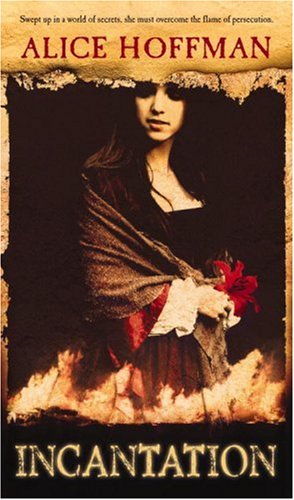
Incantation

Alice Hoffman's Incantation tells the tale of undercover Jews in Spain during the 1500s.  Our main character, Estrella, doesn't even realize her family is Jewish.  She finally puts the pieces together and sees the danger her family is in.  They have been practicing Judaism but masquerading as good Catholics for years. When they are found out . . . well, it won't be good. At one point, Estrella thinks, "Still, I coudln't help but wonder if it was a mistake for people like us to be tied to a place. If we weren't meant to wander.  If everything we needed was tied up in who we were."  Later, she asks her grandfather a similar question.  He answers, "You run once, what makes you think you won't have to run all the rest of your life?" But if you don't run, will there be a "rest of your life"? 
Incantation is a great historical fiction for the young adult reader.  It delves into history, telling a tale we don't come across too often.  I recommend this novel to all YA Historical Fiction fans. Read on! 

Friday, January 11, 2013

The Leviathan Trilogy: Leviathan, Behemoth, Goliath


In Scott Westerfeld's best work, the Leviathan Trilogy featuring Leviathan, Behemoth, and Goliath,we meet some great characters and go on an exciting adventure through alterna-history's WWI with both an Allied and an Axis perspective. The trilogy has elements of both steampunk and fantasy as well as threading in truths and actual people from history (Westerfeld includes an afterward correcting some of his alterna-history).  It was a lively exciting read that I highly recommend to any reader. I give it five stars. Westerfeld, you hit your mark with these works. Read on, my friends.

Tuesday, January 8, 2013

Virgin Earth


Virgin Earth, the free-standing sequel to Earthly Joys by Philippa Gregory, tells the story of John's son, John. The two men have never seen eye-to-eye, especially in the turmoil of England, but they have been able to make it work because they need to, because they are both gardeners for the king. And so John the younger goes to Virginia (remember, this is pre-United States of America. This is early Jamestown days) to collect new plants and escape the pain of his wife's death. While there, he falls in love with his young Powhatan guide. But the story doesn't end there! John travels back to England, then back to Virginia, and back to England again. Similar to Earthly Joys, yet slightly more enjoyable, there are nice aspects to Virgin Earth. It's neat to learn about the way of the Powhatan and the changes England goes through prior to and during it's civil war. But it has the same problems as Earthly Joys, too. I didn't connect with this John, either. It was like Philippa was trying to cover too much ground and couldn't get into enough depth for me to enjoy it. I'm not sure that I recommend this book, but it really wasn't a terrible read. I just expect more from Ms Gregory and didn't love Virgin Earth. 

Earthly Joys


Well, Philippa, ya win some, you lose some. And you just didn't win me over with Earthy Joys, either time I've read it. The historical backdrop of the switch from the Tudors to the Stuarts was interesting, as was the tulip crash. And sometimes I even liked John (the main character), but I didn't always get why I was reading about him. Nothing was pulling me forward into the story.  it covered almost John's whole life, instead of being a story about X,Y,Z. There wasn't necessarily a conflict, or even a climax to the novel. I couldn't draw this out as a plot line diagram, as they have students do. It was a long, long novel and didn't seem like one unified story. Maybe I just didn't get the love story between John and his "masters" well enough. Maybe I didn't get his love for his plants. So, I don't really recommend this, unless you're like me and determined to read all of Philippa Gregory's books so you can honestly say she's your favorite author (I need to be researched and legit, ya'll. and I have to read everything!!) or a lover of botany. And if you do choose to read it: warning & slight spoiler -- there is one gay sex scene. 

Monday, January 7, 2013

Attack the Lusitania!


When I first saw my mom borrow this book from my grandpa, I was really excited to read it. Grandpa likes war books and this looked super exciting and about a topic I didn't know much about. Of course, it took me a while to get to reading Attack the Lusitania! amid the moves and book shuffles and the fact that I always want to read about 500 books, but I finally banned myself from the library and got to reading the books we have at home. 

I really wanted to like this novel. But no. I didn't like it at all. First of all, why even make the characters LDS? Is that a requirement for being published by Covenant? Because the characters being LDS didn't seem to have much of tie-in other than getting some of the characters to talk, but that could have been done in another way. And why were there all these different perspectives? The novel is barely over 200 pages, and I'm supposed to follow three different story-lines, one of which disappears halfway through? It made it so hard to get to know the characters and feel for them. There was no character development and I didn't feel attached to any of them. 

It was interesting to learn more about the Lusitania and the circumstances under which it was attacked, but I learned just as much about the Lusitania from The American Heiress, and I'm going to recommend that book to you instead!

Saturday, December 22, 2012

Water for Elephants


I first read Sara Gruen's Water for Elephants many, many moons ago. I love the idea 
of the old circus, the glamour and the sparkle and the majesty, even though I've never 
actually been to the circus! 

Once the movie came out, I meant to read Water for Elephants again to refresh my memory, but life got busy and books get packed (and moved and moved again) and other books get read instead and the movie was never seen. But it finally made it to the top of my pile! 

I enjoyed Water for Elephants as much the second time as I did the first. It encompasses the magic of the circus along with the devastation of The Great Depression.  It's a love story, love for a woman, an elephant, and the circus. It's a touching story with characters who come to life. I really felt like I knew the characters and I cared about what happened to them. 

The only thing I don't like about this novel is the bookending of the past by the present.
 Of course, I always say that about books like this. I don't feel the need for the small story
 of the present. I'm happy with the story of the past. It's enough for me. It's a great story 
and I think you'll like it too! Enjoy! 

Tuesday, October 16, 2012

Before Versailles: Before the History You Know . . . A Novel of Louis XIV


Before Versailles  by Karleen Koen introduces us to a younger Louis XIV than we are used to.  This is Louis before he became the great sun god that we know him as today. This is a newly wed Louis trying to establish himself as a king, trying to decide what kind of king he wants to be and who he can trust. 

The story is not only told around Louis, but many characters at court tell their story and their interaction with the king.  Sometimes there are almost too many characters, but one can only fault history. 

Equally the main character as Louis is Louise, a lady-in-waiting to the king's sister-in-law, Henriette. Louise is new to court, and she, too, must decide who she wants to be and who she can trust. 

I began  Before Versailles with some trepidation; I wasn't sure how dense the reading would be.  Once I got used to Koen's style, I really enjoyed the novel. I learned a lot about XIV that I never knew before and now I want to read more about him.  I recommend this to any historical fiction junkie like myself, or anyone wanting to learn more about France and Louis XIV's early days. 

Friday, August 10, 2012

Alias Grace


I absolutely, 100% loooved this book!

Alias Grace is based on the true story of Grace Marks with a fictional narrative. In 1842, Thomas Kinnear and his housekeeper Nancy Montgomery were murdered. Grace Marks and James McDermott, servants of Kinnear, were convicted of the murder. Despite all this, Grace believes herself to be innocent. She doesn't remember the murder. And this novel reveals how, exactly, this came to be and how the murders were committed, as Grace tells her story, her memories, to psychiatrist Dr Jordan. [Not for reals, though, ya'll. This is a work of FICTION] Like Grace's quilt, her story has a pattern which slowly reveals itself to the reader.  It's a great book. Go check it out from your library. You'll love it. 

Thursday, August 9, 2012

The Blind Assassin

"A fist is worth more than the sum of its fingers"


Set in present day Canada, we read the story of sisters Iris and Laura in flashbacks working their way to the present. It definitely resounds as a Margaret Atwood novel, but it mostly reminded my of The Vanishing Act of Esme Lennox.  It's a story within a story, not only of the present and finding the secrets of the past, but another story, of science fiction that resembles reality. There is, as always, a gradual revelation to the truth. 

I found The Blind Assassin to be rather captivating, and while I could put it down, it took some persuasion. It's a puzzle of a novel, and I highly recommend it!

Friday, July 27, 2012

The First Princess of Wales


After I read The Irish Princess, I thought it would be worth it to look into more books by Karen Harper, and I found The First Princess of Wales. I thought it sounded super neat! An earlier time period than I've read and new characters; I'm always up for that! So I checked it out from the library and started reading it, when I realized that the original title was Sweet Passion's Pain. If I had known that in the first place, I don't know that I would have picked up the book. It sounds a little like a harlequin novel! But I was already into the book and liked it so far, and it didn't seem naughty, so I kept reading. 

The First Princess of Wales is a historical fiction set in medieval times about a young girl, Joan of Kent, who is brought to Queen Phillipa's court and meets and falls in love, and lust, with Edward the Black Knight, Prince of Wales, who returns her lusty feelings, and perhaps her love. However, the Queen and King do not find Joan to be a suitable match for their son and she is quickly married off to someone else., despite the fact that Edward and Joan have become lovers and intend to stay that way. [Their lovemaking is not described in awkward detail.] It felt a lot like that game we used to play: Do, Date, or Marry. Or was it Do, Dump, or Marry? Either  way . . .

This novel just didn't read the way I thought it would. It wasn't what I thought it would be. [I also came into the novel thinking it was about the York/Lancaster split. My bad! But I'd love to read a book like that if anyone knows of one!] What I thought would be at least the middle, if not earlier, was the end! It took so long to get there, and then there was nothing after! I wanted to read more and was disappointed that it was already over. If I wasn't so determined to finish the book though . . . it's just that Harper's books take soooo long to read! They draaaag on and on! Both of hers that I've read have taken me much longer than I would have though given the number of pages and subject matter. I feel like I should like her work, but I just really don't. I kept finding myself thinking that it would have been more exciting if Philippa Gregory had written it. She's much more of a captivating author. Gregory also includes a family tree when necessary, which Harper didn't. I really needed one, because Joan and Edward are related, probably third cousins given my reading, but sometimes they talked and made it sound like a much closer relation. A family tree would have been helpful. Gregory, as most historical fiction writers, also adds an author's note or a historical note at the end to explain what was truth and where liberties were taken. Harper did no such thing. So I went to my easiest and closest resource: Wikipedia. And Wikipedia makes Joan sound so much more interesting than the book ever did!  It talks about her plotting to get even with the king for her fathers death, as does the back of the book, but that was hardly present compared to her pining over Edward and their illicit rendezvouses!  Harper clearly took liberties with her characters, especially their ages in relation to one another and when events happened, and was inconsistent throughout. 

Really, it was like Karen Harper took some characters from history and instead of writing a historical fiction, she wrote a romance. And it was a very strange romance at that, given that *ahem* force was often used. Anyway, there were some good parts, but I expected a much higher caliber of writing and, frankly, research about the subject. The First Princess of Wales was a bit of a let-down for me. 

The Whipping Boy


For the sixth graders medieval unit, they were put into different reading groups with classmates on similar reading levels. The Whipping Boy was the book I read with my group. It's about Prince Brat and his whipping boy, Jemmy, and how they run away from the castle & encounter some real characters! 

It was a cute little book with a good moral, but the students thought it was pretty lame and I tend to agree a little. It was written to a much younger audience. I think Jordyn would like it much better than my students did. It's much more for a younger audience, and I didn't think it was that great for a Newbery. I expect a lot when I see that seal, and The Whipping Boy, while cute, didn't quite live up to that standard.