Antoinette May takes the important tale of Christ and Pontius Pilate and puts a spin on it, telling it from a woman, Claudia, Pilate's wife, via her life story. Pilate's Wife is an intellectual read, but once the story is started, it's hard to stop reading. Truthfully, I'm not very knowledgeable about this time period in history, nor do I buy that this is the "true story" of Christ, but it's an interesting theory. Under the genre of historical fiction, I found it a very interesting read. I recommend it to any who enjoy reading about women in history. 4 Stars.
Showing posts with label Christianity. Show all posts
Friday, September 13, 2013
Pilate's Wife
Labels:
Antoinette May,
Books,
Christianity,
Fiction,
Historical Fiction,
Pilate's Wife,
Religion,
Rome
Tuesday, February 5, 2013
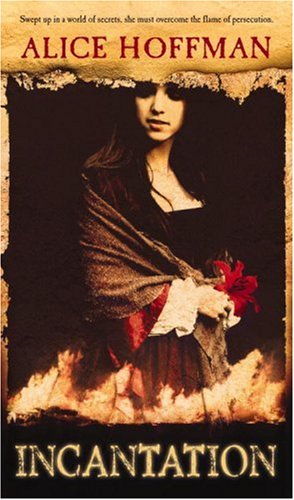
Incantation

Alice Hoffman's Incantation tells the tale of undercover Jews in Spain during the 1500s. Our main character, Estrella, doesn't even realize her family is Jewish. She finally puts the pieces together and sees the danger her family is in. They have been practicing Judaism but masquerading as good Catholics for years. When they are found out . . . well, it won't be good. At one point, Estrella thinks, "Still, I coudln't help but wonder if it was a mistake for people like us to be tied to a place. If we weren't meant to wander. If everything we needed was tied up in who we were." Later, she asks her grandfather a similar question. He answers, "You run once, what makes you think you won't have to run all the rest of your life?" But if you don't run, will there be a "rest of your life"?
Incantation is a great historical fiction for the young adult reader. It delves into history, telling a tale we don't come across too often. I recommend this novel to all YA Historical Fiction fans. Read on!
Labels:
Alice Hoffman,
Christianity,
Family,
Fiction,
Historical Fiction,
Incantation,
Judaism,
Religion,
Spain,
YA
Monday, February 4, 2013
Narnia and the Bible
I recently read The Chronicles of Narnia by CS Lewis and could not help but agree with those who slate it as a children's bible with obvious allusions to biblical stories and morals as well as Christ himself.
In the first novel, The Magician's Nephew, Polly and Digory watch Aslan sing Narnia into existence. The world was empty: Aslan brought it to life. He sang the plants and animals out of the ground. He gave Narnia a king and queen in Frank and Helen; who would be the two humans to have dominion over the Narnians. They would rule and care for them. But Aslan also created a tree, even a guarded tree. A tree near which the evil Jadis plays the role of the serpent to seduce Digory into eating. The Magician's Nephew retells the creation and the fall from Genesis. Aslan is clearly Christ, or God, in making his Earth, Jadis acts as Satan, and Frank and Helen play the roles of Adam and Eve set to take care of their creatures while Digory doubles as an Eve considering his relationship with the tree.
In The Lion, the Witch, and the Wardrobe, we again see Aslan as a Christ figure. He has been gone from Narnia; Jadis, as the White Witch, reigns all of Narnia. Stories are told of Aslan, but no one has seen him. Some still have hope, some do not. Then the Pevensie children arrive, seemingly to fulfill a prophesy. At any rate, Jadis does not want them there to interfere.
Aslan appears, finally, to those who believe in him and willingly gives his life in Edmund's place. He goes quite like a lamb to the slaughter and meekly allows himself to be shaved and beaten before he is killed. Lucy and Susan, ever faithful and representing Mary and Mary Magdalene, go to mourn Aslan's body and find, instead, that he is very much alive. Different from Christ, Aslan does not take three days, but is risen almost immediately to return and lead his troops to success. His good finally defeats Jadis's evil.
But all too soon Aslan must leave again. he crowns the four Pevensie children, making Peter High King. He sets up Narnia for his departure, just as Christ prepared his disciples. Peter is said to represent the biblical Peter upon whom Christ builds his church and Catholics believe to be the first Pope. Lewis is presenting us here with, if not clearly an allegory of Christ's life, death, and resurrection, than at least a parable with morals taught to the reader.
The Horse and His Boy takes place in Narnia's golden age, under the rule of High King Peter. There is not so much of a tie-in to a biblical tale in this work, so much as a moral or parable taught. Aslan appears, not as himself, throughout the novel, and then presents himself as himself to the children Shasta and Avaris. he reveals that he was all of the lions they met along their journey, acting to protect them all along. This reminded me of the footprints poem or Poor Wayfaring Man of Grief. Just because we don't think it's the Lord; it doesn't mean it's not.
Prince Caspian also gives us a parable. Lucy believes she is seeing Aslan, but everyone thinks she is being silly and childish, so she doesn't not follow him. Once Lu does follow him, she can finally see and speak with him. The others follow and eventually can see him too. Lucy is later chastised by Aslan, and learns that she should have followed him regardless. Likewise, we should follow Christ even if those around us will not, even if it is difficult, because it's the right thing to do. By acting on faith, we will be rewarded.
There's also a quote that I really liked, where a Narnian is confused about calling on the Old kings, the Pevensies, or calling on Aslan. his question is answered with, "If you mean Aslan, it's all one calling on him and on the kings. They were his servants." They would act, hopefully, as Aslan would. The Pevensies here are similar to Christ's prophets. They will only act in his interest.
Aslan also restores Caspian to his rightful throne. He is set up as king to care for the Narnians. This could read, depending on one's religious preferences, of the restoration of the true church after corruption.
I found The Voyage of the Dawn Treader and The Silver Chair to be the least allegorical of the series. The best I can come up with is the characters' struggle for light over dark and searching for the spiritual life and Aslan's land, especially Reepicheep, in Voyage. In Silver Chair my link to scriptures and spirituality would be that the spirituality and stories of Alsan are dying in the land. The world is becoming a darker place as it is being set up for the end of Narnia.
The Last Battle is the Narnian Revelations and consequent end of the world. At this point, the reader is already familiar with the main characters, and no time is wasted with getting straight to the point and conclusion of Narnia. A false Aslan, or an anti-Christ, is introduced, and because it has been so long since Aslan has visited or anyone has spoken of him, the Narnians to not realize that he is asking things of them that the real Aslan never would. Shift, an old ape, presents himself as the new Aslan's keeper and voice piece. He doesn't let the people see Aslan and doesn't let him speak. Shift is the one with the power and is the real representation of the Anti-Christ.
Shift begins to collaborate with the Calormenes and is slowly selling Narnians as slaves to them. Some Narnians are catching on to Shift's falseness, others still yearn to see Aslan for themselves and hang onto Shift's every world. With the appearance of Jill and Eustace, and then other Friends of Narnia, the world begins to fall apart. There is a final judgement and few are chosen to join the Friends of Narnia in Aslan's paradisaical country.
Strangely, Emeth, a Calormene soldier and worshiper of Tash, a false God, is admitted to Aslan's Land. Emeth is confused, but greeted warmly by Aslan. Because Emeth did good in Tash's name, he was truly doing good for Aslan. Aslan tells him: "I take to me the service which thou hast done to Tash . . . if any man swear by him and keep his oath for the oath's sake, it is by me that he has truly sworn, though he knew it not, and it is I who reward him." There is some controversy regarding Emeth's "admission to heaven," as it were, but I prefer to take the side that Jesus, like Aslan, will not punish good people simply for doing good things in someone else's name, especially if they have never heard of them.
Despite Lewis's protestations of Narnia being allegorical, an argument is easy to make that they are. So it comes down to the question of intent: If Lewis did not intend them to be allegorical, can they be? Or does his intent have no impact on the reader, who may or may not see them as allegorical? What do you think?
In the first novel, The Magician's Nephew, Polly and Digory watch Aslan sing Narnia into existence. The world was empty: Aslan brought it to life. He sang the plants and animals out of the ground. He gave Narnia a king and queen in Frank and Helen; who would be the two humans to have dominion over the Narnians. They would rule and care for them. But Aslan also created a tree, even a guarded tree. A tree near which the evil Jadis plays the role of the serpent to seduce Digory into eating. The Magician's Nephew retells the creation and the fall from Genesis. Aslan is clearly Christ, or God, in making his Earth, Jadis acts as Satan, and Frank and Helen play the roles of Adam and Eve set to take care of their creatures while Digory doubles as an Eve considering his relationship with the tree.
In The Lion, the Witch, and the Wardrobe, we again see Aslan as a Christ figure. He has been gone from Narnia; Jadis, as the White Witch, reigns all of Narnia. Stories are told of Aslan, but no one has seen him. Some still have hope, some do not. Then the Pevensie children arrive, seemingly to fulfill a prophesy. At any rate, Jadis does not want them there to interfere.
Aslan appears, finally, to those who believe in him and willingly gives his life in Edmund's place. He goes quite like a lamb to the slaughter and meekly allows himself to be shaved and beaten before he is killed. Lucy and Susan, ever faithful and representing Mary and Mary Magdalene, go to mourn Aslan's body and find, instead, that he is very much alive. Different from Christ, Aslan does not take three days, but is risen almost immediately to return and lead his troops to success. His good finally defeats Jadis's evil.
But all too soon Aslan must leave again. he crowns the four Pevensie children, making Peter High King. He sets up Narnia for his departure, just as Christ prepared his disciples. Peter is said to represent the biblical Peter upon whom Christ builds his church and Catholics believe to be the first Pope. Lewis is presenting us here with, if not clearly an allegory of Christ's life, death, and resurrection, than at least a parable with morals taught to the reader.
The Horse and His Boy takes place in Narnia's golden age, under the rule of High King Peter. There is not so much of a tie-in to a biblical tale in this work, so much as a moral or parable taught. Aslan appears, not as himself, throughout the novel, and then presents himself as himself to the children Shasta and Avaris. he reveals that he was all of the lions they met along their journey, acting to protect them all along. This reminded me of the footprints poem or Poor Wayfaring Man of Grief. Just because we don't think it's the Lord; it doesn't mean it's not.
Prince Caspian also gives us a parable. Lucy believes she is seeing Aslan, but everyone thinks she is being silly and childish, so she doesn't not follow him. Once Lu does follow him, she can finally see and speak with him. The others follow and eventually can see him too. Lucy is later chastised by Aslan, and learns that she should have followed him regardless. Likewise, we should follow Christ even if those around us will not, even if it is difficult, because it's the right thing to do. By acting on faith, we will be rewarded.
There's also a quote that I really liked, where a Narnian is confused about calling on the Old kings, the Pevensies, or calling on Aslan. his question is answered with, "If you mean Aslan, it's all one calling on him and on the kings. They were his servants." They would act, hopefully, as Aslan would. The Pevensies here are similar to Christ's prophets. They will only act in his interest.
Aslan also restores Caspian to his rightful throne. He is set up as king to care for the Narnians. This could read, depending on one's religious preferences, of the restoration of the true church after corruption.
I found The Voyage of the Dawn Treader and The Silver Chair to be the least allegorical of the series. The best I can come up with is the characters' struggle for light over dark and searching for the spiritual life and Aslan's land, especially Reepicheep, in Voyage. In Silver Chair my link to scriptures and spirituality would be that the spirituality and stories of Alsan are dying in the land. The world is becoming a darker place as it is being set up for the end of Narnia.
The Last Battle is the Narnian Revelations and consequent end of the world. At this point, the reader is already familiar with the main characters, and no time is wasted with getting straight to the point and conclusion of Narnia. A false Aslan, or an anti-Christ, is introduced, and because it has been so long since Aslan has visited or anyone has spoken of him, the Narnians to not realize that he is asking things of them that the real Aslan never would. Shift, an old ape, presents himself as the new Aslan's keeper and voice piece. He doesn't let the people see Aslan and doesn't let him speak. Shift is the one with the power and is the real representation of the Anti-Christ.
Shift begins to collaborate with the Calormenes and is slowly selling Narnians as slaves to them. Some Narnians are catching on to Shift's falseness, others still yearn to see Aslan for themselves and hang onto Shift's every world. With the appearance of Jill and Eustace, and then other Friends of Narnia, the world begins to fall apart. There is a final judgement and few are chosen to join the Friends of Narnia in Aslan's paradisaical country.
Strangely, Emeth, a Calormene soldier and worshiper of Tash, a false God, is admitted to Aslan's Land. Emeth is confused, but greeted warmly by Aslan. Because Emeth did good in Tash's name, he was truly doing good for Aslan. Aslan tells him: "I take to me the service which thou hast done to Tash . . . if any man swear by him and keep his oath for the oath's sake, it is by me that he has truly sworn, though he knew it not, and it is I who reward him." There is some controversy regarding Emeth's "admission to heaven," as it were, but I prefer to take the side that Jesus, like Aslan, will not punish good people simply for doing good things in someone else's name, especially if they have never heard of them.
Despite Lewis's protestations of Narnia being allegorical, an argument is easy to make that they are. So it comes down to the question of intent: If Lewis did not intend them to be allegorical, can they be? Or does his intent have no impact on the reader, who may or may not see them as allegorical? What do you think?
Labels:
Allegory,
Aslan,
Christianity,
CS Lewis,
Jesus,
Narnia,
Religion,
Spirituality,
The Bible,
The Chronicles of Narnia
Wednesday, January 23, 2013
The Chronicles of Narnia

After many years from whence I set my mind to it, I finally read The Chronicles of Narnia. It was very interesting to read these works that many have discussed and, actually, debated. One of the main debates is which order to read them in: how Lewis wrote and published them, or in chronological order, as they are currently published. My copy has all seven in one, and I read them in the order the appeared in this compilation, chronologically.
One of my reasons for wanted to read Narnia in the first place was because I'd heard it was like a children's bible; a way to present some of the stories and morals from the bible to young children. In fact, when I first read The Magician's Nephew a few years ago, I wrote a paper on it connecting it to Genesis's telling of the creation and the tale of Adam and Eve. It seems to me that Narnia certainly has many links to the bible, but not in an annoying way, more in a teach-your-child kind of way.
Lewis denied allegorical intent in his writing, instead stating that the aspects of Christianity he presented are merely "supposition"1 and I find they're still a great series regardless of their Christian aspect. They're written for younger children, but enjoyable to all ages. I highly recommend this series (even though I didn't like the ending!): just read the books before the movies because they're very different, especially in the battles. Read on!
1. http://en.wikipedia.org/wiki/Narnia_books Yes, it's Wikipedia, but I'm quoting a cited source. I just don't know if it's 51 or 52! :)
Labels:
Allegory,
Animals,
Christianity,
CS Lewis,
Fantasy,
Fiction,
Juvenile Fiction,
Magic,
Narnia,
Religion,
The Chronicles of Narnia,
YA
Sunday, October 7, 2012
Spiritual Sunday: General Conference
This weekend was the 182 Semiannual General Conference for The Church of Jesus Christ of Latter Day Saints. Here's some of my favorite parts from today (not direct quotes, just kind of highlights and my thoughts).
Boyd K Packer
Jeffrey R Holland
President Thomas S Monson
Robert D Hales
Boyd K Packer
- We all make mistakes, what is important is fixing our mistakes and repenting of them.
- Our message [as members of the church] is one of Faith, Hope, and Jesus as our Savior.
Jeffrey R Holland
- I always forget how little knowledge Jesus's disciples had upon his death. Elder Holland reminded me of how limited their knowledge was in the gospel, especially as we understand it today.
- Elder Holland told the story of the disciples after Christ's death and their return to fishing. It was a similar experience to when Christ first called them to serve. Once the disciples realized Christ was resurrected, they were once again called to serve him.
- Jesus asked Peter, "Do you love me?" three times, reminding him of experiences just days before. "Then feed my sheep!"
- Will God ask us the same question upon our meeting?
- Love equals loyalty; if we love God, we are loyal to Him.
- Christ's death was the beginning of Christianity, not the end.
- The call is to come and stay true. The Lord expects our love at every stage of our lives.
- Am I feeding His sheep?
President Thomas S Monson
- Don't dwell on the negative, take a step back and find the positive.
- "Men are that they might have joy"
- Never postpone a prompting!
- Allow yourself to be an instrument in the Lord's hands
- The opportunity to be a blessing in the life of another often comes unexpectedly.
Robert D Hales
- What does it mean to be a Christian?
- Elder Hales retold the story of the disciples, but as an example to quickly return to the Lord after leaving him and receive his blessings.
- Feed His sheep!
- "The Savior will make us adequate to his work"
- "Through His love and grace we can become more Christian Christians"
- Am I a good Christian?
If you watched conference, what was your favorite part? What did you learn?
Subscribe to:
Posts (Atom)